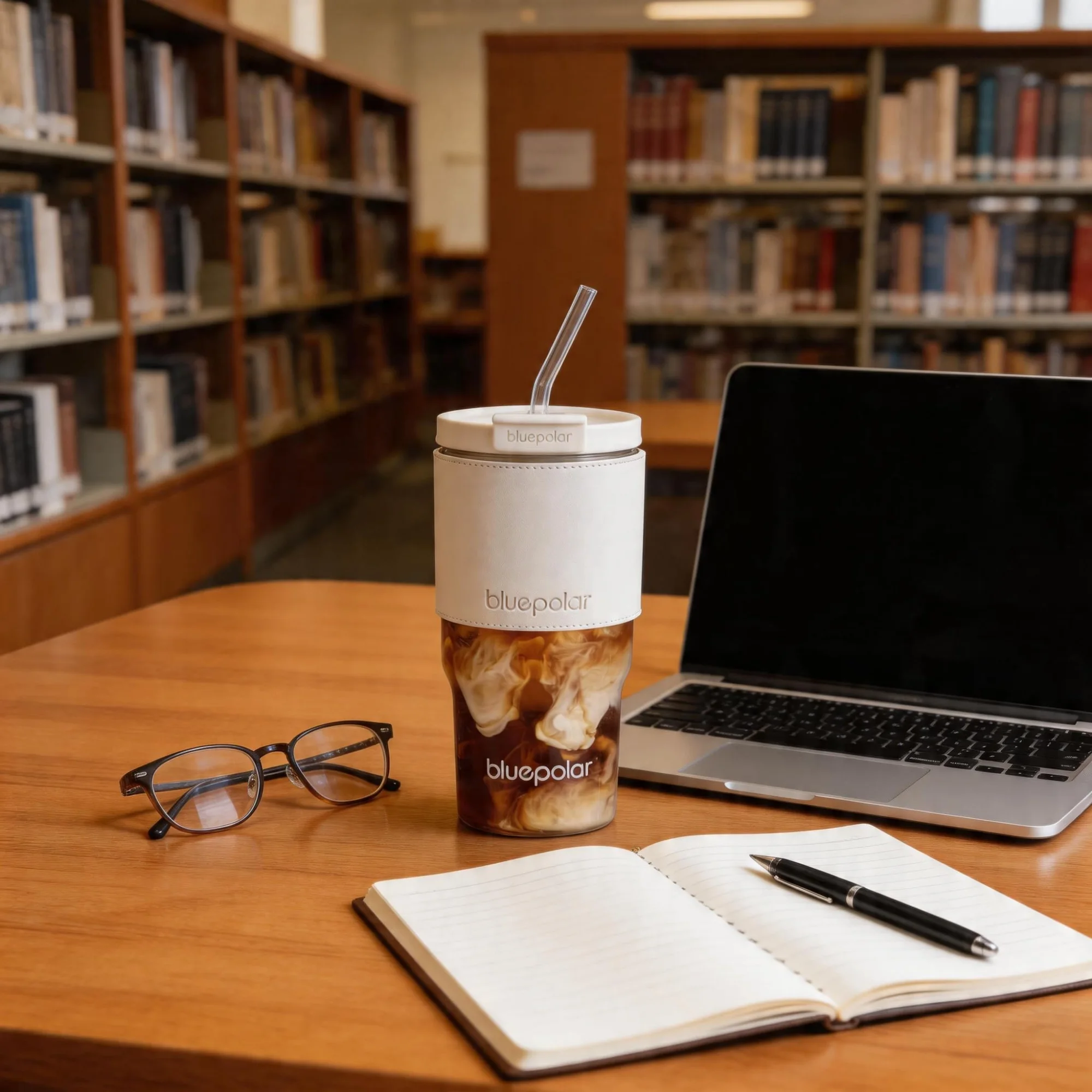
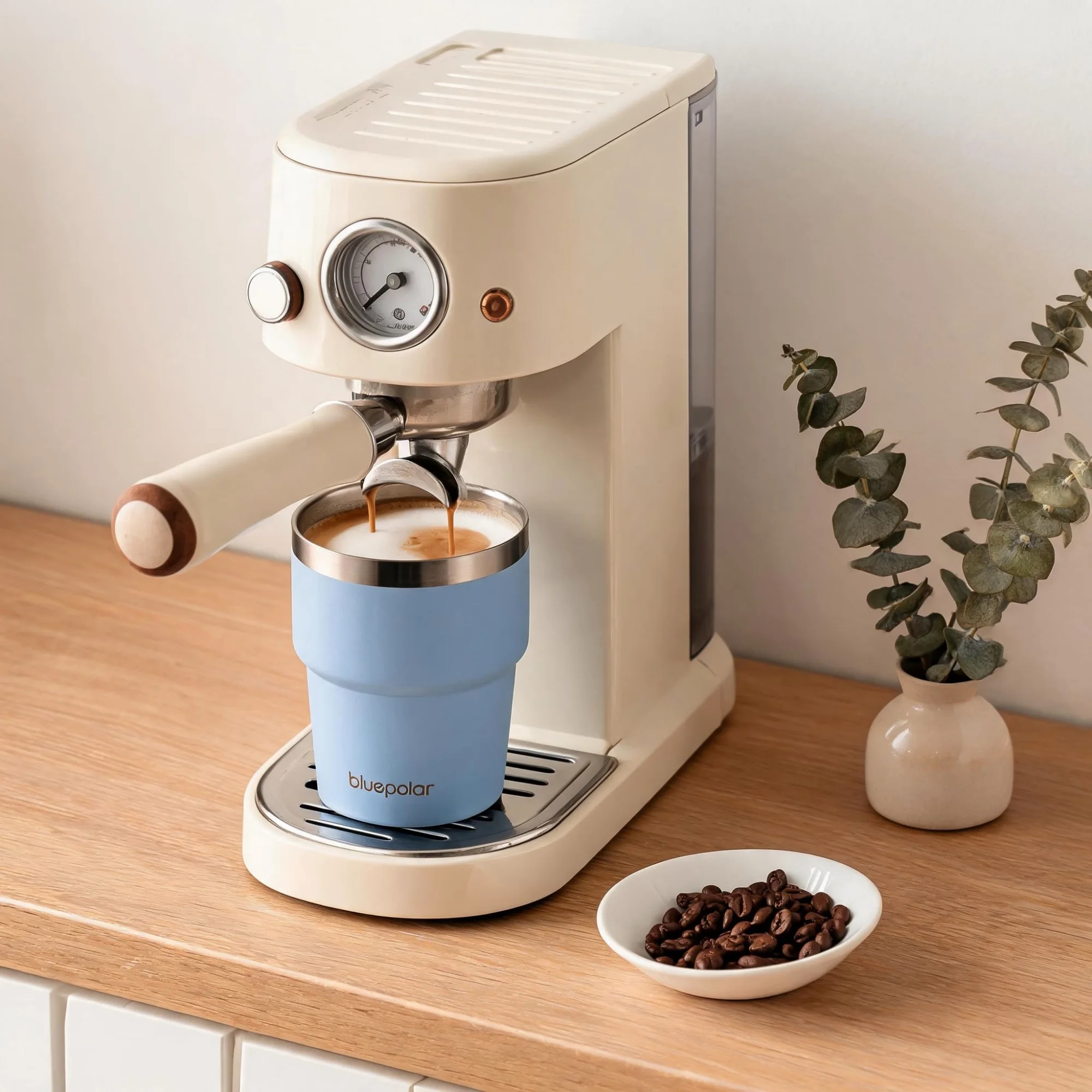
Key points
- Capacity is measured to the rim, so a 12 oz coffee over ice needs more than a 12 oz glass.
- The 13 oz glass stacks in the cupboard and suits shorter drinks, matcha and water.
- Our 16 oz glass tapers to sit low in a car cup holder, and the 17 oz glass fits most holders as well.
- For most adults the FDA cites 400 milligrams of caffeine a day, about two to three 12-fluid-ounce cups of coffee.
What the number on a glass counts
A glass sold as 13 oz holds 13 ounces when it is filled to the rim, about 400 ml, and nothing keeps the ice out of that space. Most iced drinks start with ice in the empty glass, so the cubes claim a good share of the room before any coffee arrives. Pour a 12 oz drink over them and some of it stays in the jug. The glass is big enough for the drink, just not for the drink and the ice together.
So start from the drink you make most mornings, then add the ice you like. Two cubes in cold brew leave plenty of space in 13 oz, while a glass packed to the top before the pour calls for 17. Leave a little air under the lid too: on every one of our glasses we say to pour to just under the rim. For the drinks themselves, our iced coffee notes walk through cold brew, flash-chilled coffee and the sugar that slips in with syrups.
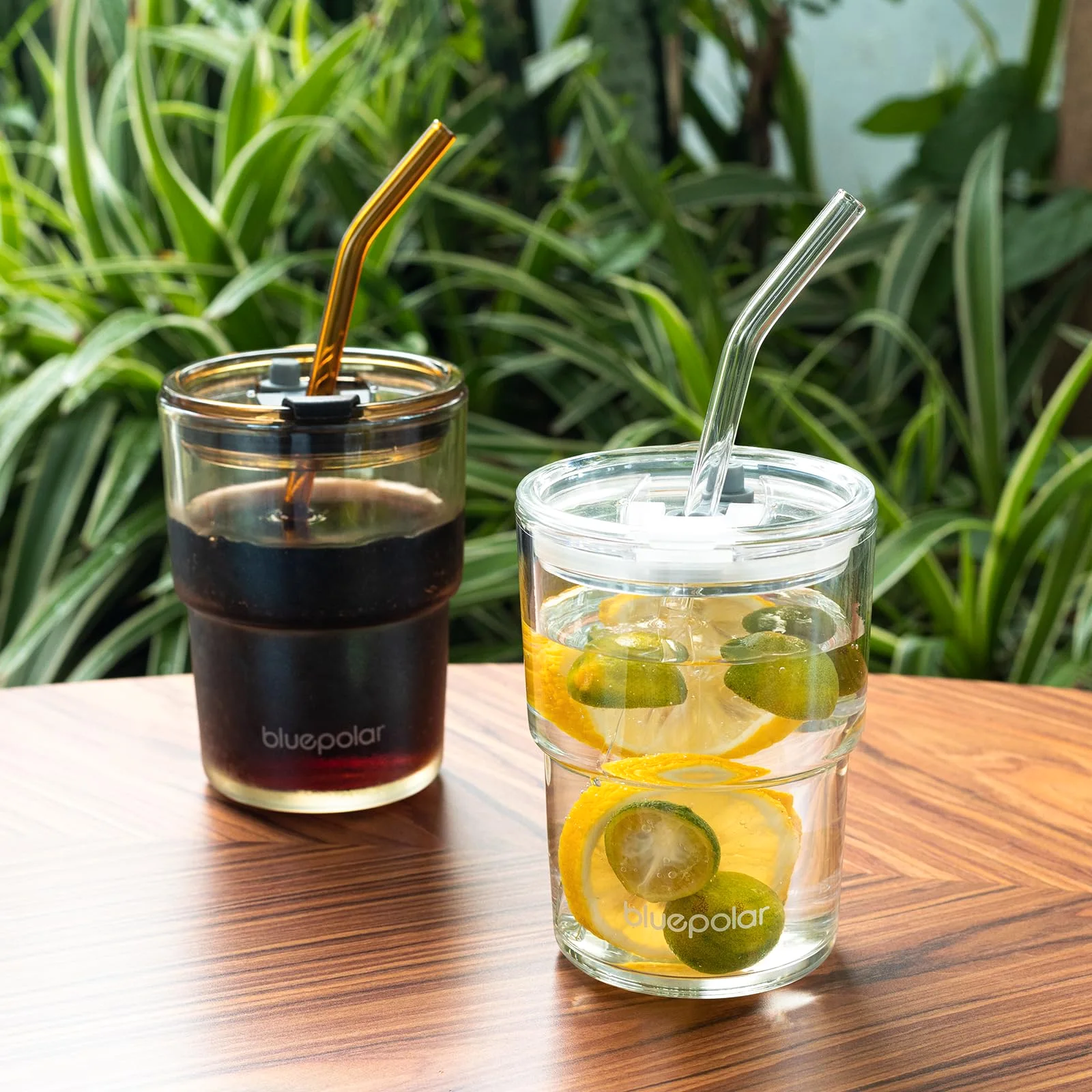
Four glasses side by side
Across our glasses the height changes far more than the footprint. The bases sit within a fraction of an inch of each other, about 2.7 to 2.8 inches across. That is why a cup holder that takes one of them usually takes the next. What grows is the glass itself, from about 4.7 inches on the 13 oz to about 6.6 inches on the tallest. A taller body also needs a longer straw: the tallest glass comes with a 9 inch straw, the 13 oz with one of about 8 inches.
| Glass | Holds | Height | Base | Suits |
|---|---|---|---|---|
| 13 oz stacking glass | 13 oz (400 ml) | About 4.7 to 4.9 in | About 2.75 in | Iced coffee, matcha and water at a desk |
| 16 oz car cup holder glass | 16 oz (480 ml) | About 5.2 in | Tapers narrower than the rim | Iced coffee on the commute |
| 17 oz glass | 17 oz (500 ml) | About 5.6 in | About 2.8 in | A full iced latte or smoothie with ice to spare |
| Tall glass in a silicone sleeve | 20 oz gray, 23 oz pink | About 6.6 in | About 2.7 in | Iced tea or water through the afternoon |
The 13 oz glass, for shorter drinks and a full cupboard
Our classic glass is the one to pick when the drink is short or the shelf is crowded. A step halfway down the side lets one glass sit inside the next, so four of them take little more shelf space than one. You can have it clear or amber, and buy one, two or four at a time. The lid takes the glass straw through one hole and lets you sip through the other, and a slider closes the sip hole when the glass rides in a bag.
Matcha, cold brew with a splash of milk, a glass of water on the nightstand: these fit with ice to spare. A large coffee order over a heap of ice does not. If a heavy pour of ice is how you like it, take the 17 oz glass rather than fight the rim every morning. People also keep the 13 oz on the desk for its thick wall and base, which let it stand firm in a cup holder.
16 and 17 oz, for a coffee with ice to spare
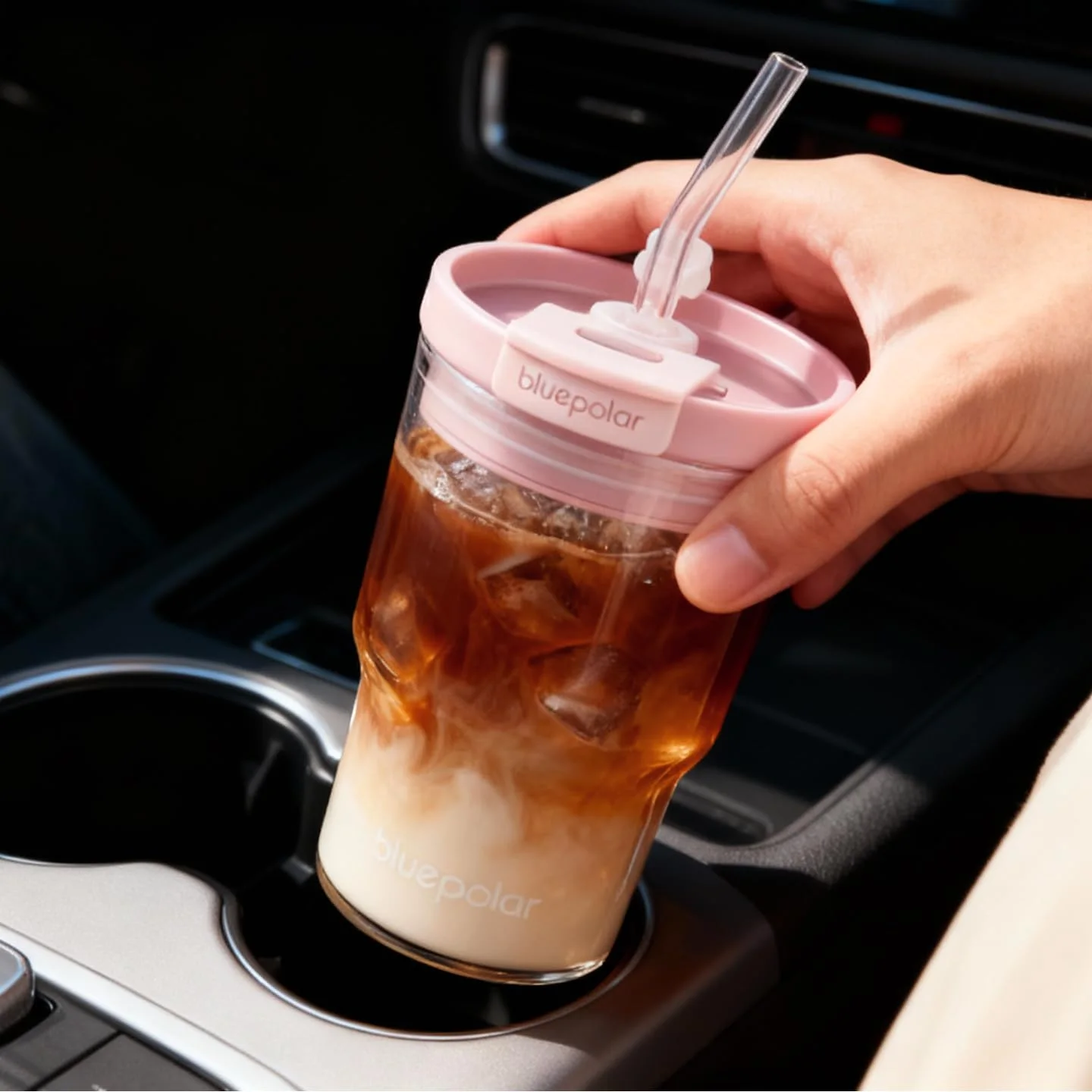
Between the two middle sizes, the choice comes down to where the glass rides. The 16 oz glass, 480 ml, narrows toward the base, so it drops low into a car cup holder and stays put. It stands about 5.2 inches tall, and its lid seals with silicone. Pick a pink lid, a pink lid with a silicone sleeve, or a white lid with a white faux-leather sleeve. Our car cup holder shelf shows them next to each other.
At 17 oz, or 500 ml, the tall glass gives a 12 oz coffee a full glass of ice underneath. Its body is borosilicate glass, nearly straight and about 5.6 inches high, and the base sits in most car cup holders. Each one ships with two glass straws, a wide plastic straw for thick smoothies and a cleaning brush. Lids come in cream, gray or pink.
20 or 23 oz, for water that lasts the afternoon
Our tallest glass stands about 6.6 inches in a silicone sleeve, and its 9 inch straw reaches the bottom. The gray one holds 20 oz and the pink one 23 oz. It is built for the drinks you sip for hours, and water is the obvious one. To help you drink more water, the CDC suggests carrying a reusable water bottle and adding a wedge of lime or lemon. A tall glass on your desk with a slice of lemon in it does the same job, and a refill from the tap costs nothing.
On the same CDC page, plain coffee and tea count as low-calorie choices, so unsweetened iced tea belongs in this glass too. Pull the seal ring out of the lid every few washes and rinse it on its own.
How much coffee a day fits
Size also decides how much coffee goes into you, and caffeine adds up glass by glass. For most adults the FDA has cited 400 milligrams a day, about two to three 12-fluid-ounce cups of coffee, as an amount not generally associated with negative effects. It also notes that sensitivity varies widely. Regular brewed coffee typically carries 113 to 247 milligrams per 12 fluid ounces. Decaf usually has 2 to 15 milligrams in an 8-fluid-ounce cup.
A 17 oz glass of ice with a 12 oz coffee poured over it therefore holds one of those cups. Fill the 20 oz glass with coffee and only a little ice, and you are closer to two. The CDC draws the same line: up to 400 mg a day, about 2 to 3 cups of plain coffee, can be part of a healthy diet for most adults. For a hot cup, glass is the wrong tool. Our notes on hot coffee explain why the steel tumblers take that job.
One glass in place of a stack of cups
The U.S. Environmental Protection Agency puts it plainly: the most effective way to reduce waste is to not create it in the first place. It asks people to set the table with reusable dishes, glasses and silverware as often as possible. Drinks, it says, should come along in a water bottle or thermos instead of disposable bottles or cartons. A glass that fits your usual drink, ice and all, is the one that leaves the house with you. Get the size right, and the paper cup stays on the coffee shop counter. Looking after the glass takes a minute after each drink, and our care notes cover the lid, the seal and the straws.
Every product named here is part of the BLUEPOLAR range.