Key points
- Cold brew is coarse coffee steeped in cold water overnight, then strained, so it waits in the fridge for the morning.
- Flash-chilled coffee is brewed hot at double strength over a jug of ice, and the melt brings it back to normal strength.
- The CDC counts sugar and flavored creamer stirred in at home as a sugary drink, the same as a coffee-shop syrup.
- For most adults the FDA cites 400 milligrams of caffeine a day, about two to three 12-fluid-ounce cups of coffee.
Cold brew in a jar overnight
Cold brew needs a jar, coarse ground coffee, cold water and a night in the fridge. Grind the beans coarse, about like raw sugar, because fine grounds turn the brew muddy and hard to strain. A common starting point is one cup of grounds to four cups of water, which gives a strong concentrate you cut with water or milk at the glass. Stir once so every ground gets wet, put the lid on and leave the jar in the fridge until morning.
Strain it through a paper filter or a fine sieve lined with a cloth, and the coffee stops extracting the moment the grounds come out. Taste it before you change anything. Too strong is easy, since you add more water or milk. If it tastes thin, use more coffee next time rather than a longer steep, which tends to pull out woody, bitter notes. Keep the strained concentrate in a closed bottle in the fridge.
A French press saves a step. Steep the coffee in the press overnight in the fridge, push the plunger down in the morning and pour the concentrate off the top. Whatever you brew in, rinse the grounds out the same day, before the oils turn stale and flavor the next batch.
Flash-chilled coffee when you forgot to plan
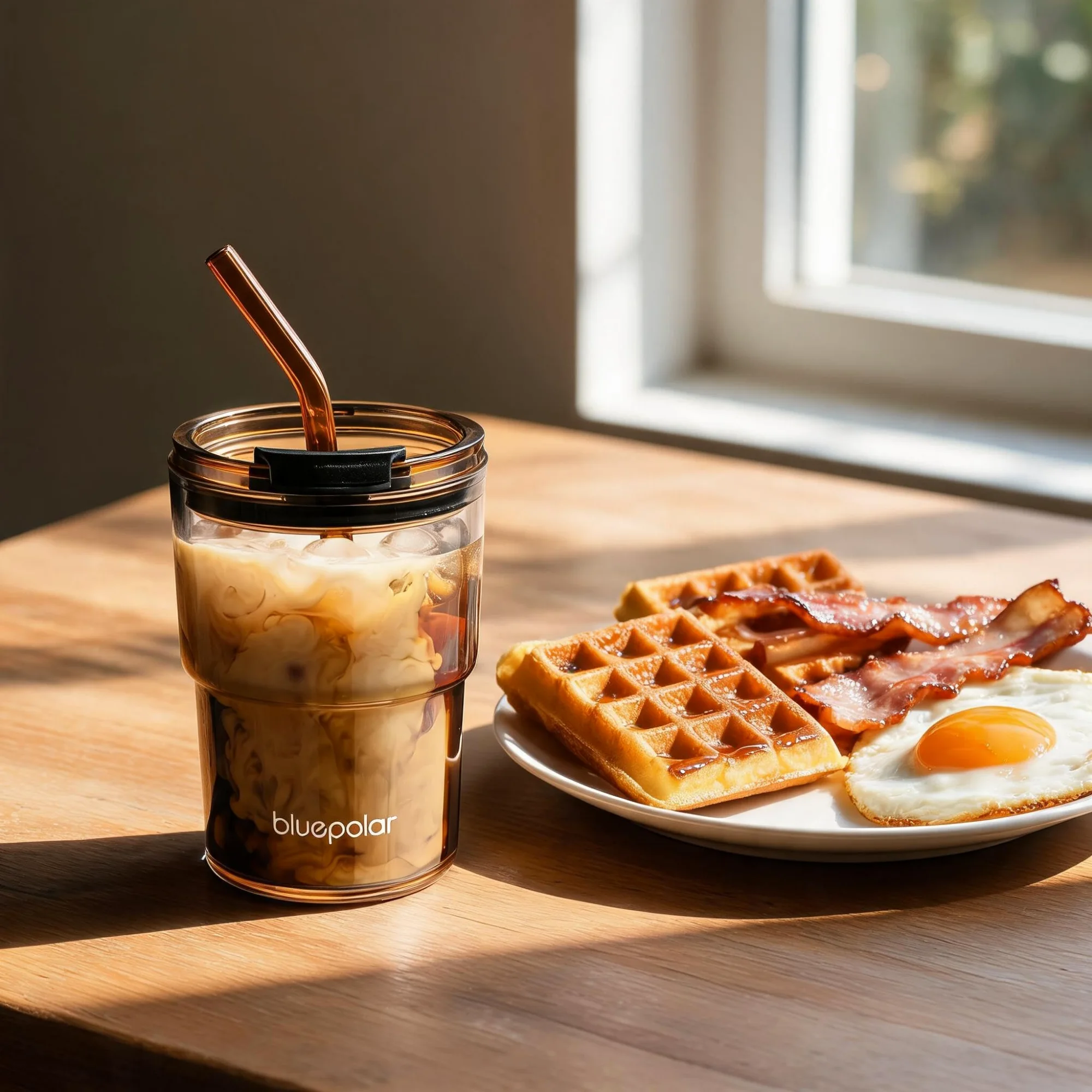
No jar in the fridge? Brew a hot coffee with half the water you would normally use, and let it drip straight onto ice in a jug or a carafe. The ice makes up the other half: it melts as the coffee lands and chills it on the way down. Flash-chilled coffee tastes brighter than cold brew, closer to the cup you drink hot, and it suits light roasts that go flat in a long cold steep.
Do the chilling in the jug, never in the glass. Hot coffee poured over ice inside a glass tumbler puts the glass through a sudden jump in temperature, and that can crack any glass. Once the coffee in the jug is cold, pour it over fresh ice in your tumbler. The same rule runs the other way: a glass that held hot tea goes on the counter to cool before ice goes in.
Leave room for the ice
Ice takes up a real share of any glass, so the size you need depends on how much of it you like. Two cubes in a cold brew with milk fit easily in our 13 oz glass. Packing the glass with ice before a 12 oz pour is another matter. That habit calls for the 17 oz glass, which leaves space for a full glass of ice under a 12 oz coffee. Fill with ice first, then pour the coffee and milk to just under the rim, and the lid goes on without a puddle. Our size notes put every glass side by side.
| Drink | Glass | Why |
|---|---|---|
| Cold brew with a splash of milk | 13 oz stacking glass | Room for a few cubes, and it stacks in the cupboard |
| A 12 oz iced coffee over a full glass of ice | 17 oz glass | Space for the ice under a 12 oz coffee |
| Iced coffee on the commute | 16 oz car cup holder glass | The tapered base sits low in the cup holder |
| An iced latte or a thick smoothie | 17 oz glass | A wide plastic straw comes in the box |
| Unsweetened iced tea all afternoon | Tall glass, 20 or 23 oz | The 9 inch straw reaches the bottom |
Syrups, creamer and the sugar you do not see
A glass of cold brew is plain coffee until something sweet goes in. According to the CDC, sugar-sweetened beverages are leading sources of added sugars in the American diet, and the list includes coffee and tea beverages with added sugars. In 2011 to 2014, 49% of U.S. adults drank a sugar-sweetened beverage on a given day, taking in 145 calories from them on average.
Home coffee is not exempt. The CDC's Rethink Your Drink page counts sugar and flavored creamer added to coffee and tea at home as sugary drinks, along with flavored coffees. At the coffee shop it suggests skipping the flavored syrups and the whipped cream. Hot or iced coffee, unsweetened, appears on the same page as an alternative to energy drinks.
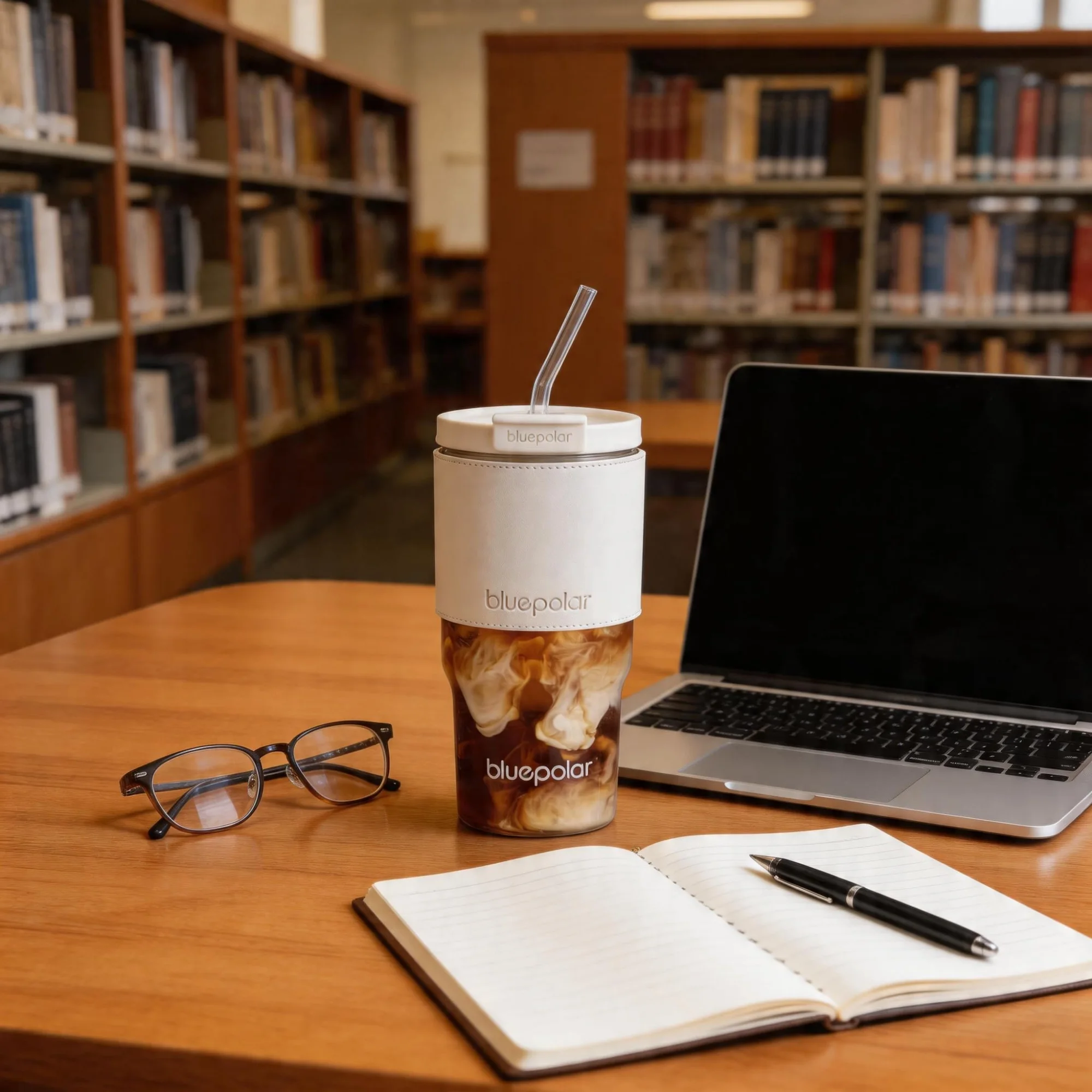
Cold brew makes that easier than you might expect, because a slow cold steep comes out round rather than sharp. Try it plain or with plain milk for a week before reaching for the pump bottle. A clear glass helps here: you can watch the milk swirl in and stop when the color looks right.

How much caffeine sits in the glass
Cold brew concentrate is easy to over-pour, since it goes down cold and smooth. The FDA puts the comfortable ceiling for most adults at 400 milligrams of caffeine a day, roughly two to three 12-fluid-ounce cups of brewed coffee. It adds that sensitivity varies widely. Regular brewed coffee typically holds 113 to 247 milligrams per 12 fluid ounces.
Homemade concentrate has no label, and its strength depends on your ratio and how much water you add. Count each glass as at least one cup of brewed coffee and pace the day from there. Decaf works for the afternoon glass: the FDA puts it at 2 to 15 milligrams in an 8-fluid-ounce cup, and it cold brews the same way as regular beans.
Taking it with you
A glass of iced coffee is only half the plan if it has to stay on the counter. Our 16 oz car cup holder glass narrows toward the base, so it drops low into the cup holder and stays there. Its silicone-sealed lid takes the glass straw, or you can sip from the edge. Fill it with ice and cold brew at home, screw the lid on and push the straw in.
Set it in the cup holder before you start the car, not at the first red light. When you get where you are going, rinse the straw with the brush that comes in the box, before the milk dries inside. For a hot coffee on the same commute, glass is the wrong choice, and the steel tumblers on our insulated shelf take that job. Every one of our iced coffee glasses sits on one page, from the 13 oz to the tallest.
Once the coffee is gone, the glass still has a job. The CDC suggests carrying a reusable water bottle with you and refilling it, and a glass with a lid and a straw does exactly that on the desk all afternoon. Rinse out the coffee, add ice and water, and the same glass carries you to the evening.
Every product named here is part of the BLUEPOLAR collection.